
Why Ecommerce Automation Experts Are Essential for Online Business Growth
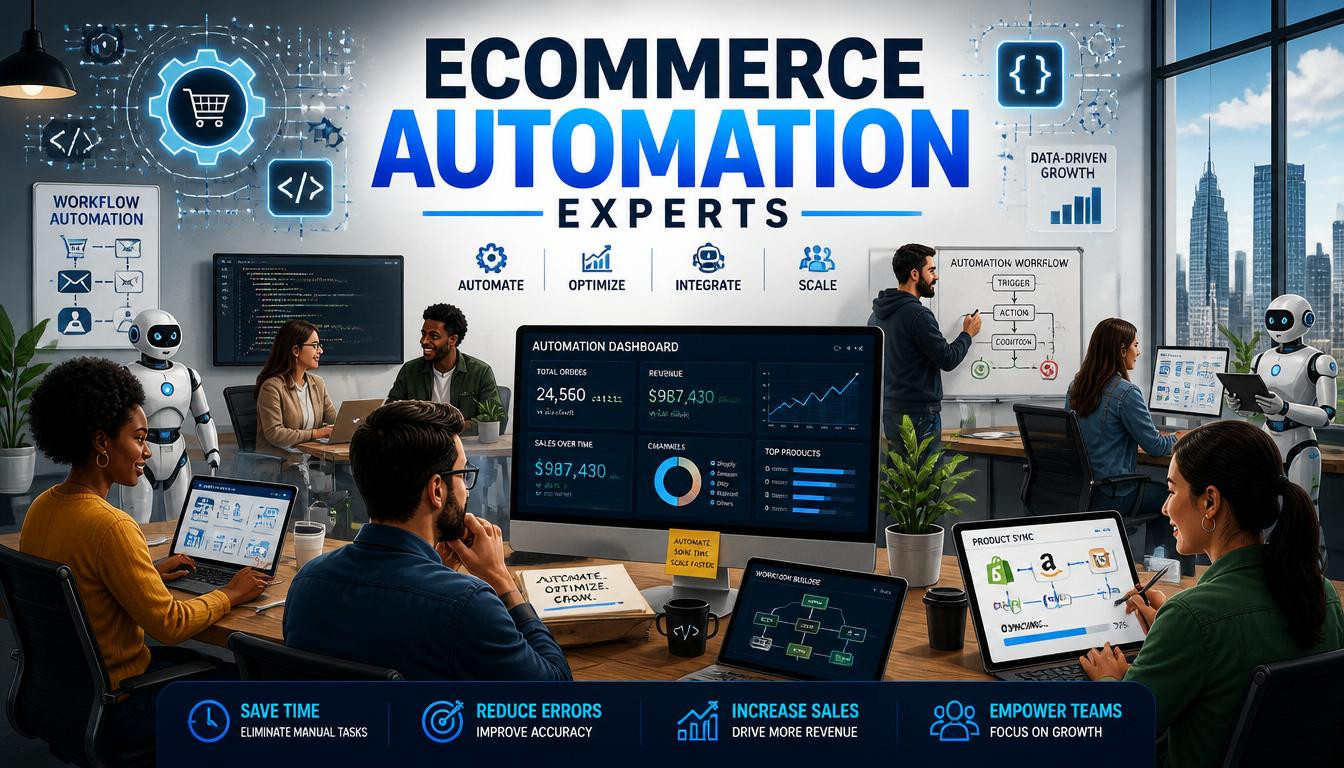
Online stores today rely on intricate elements. These include returns, inventory, customer service, analytics, and more. Doing all these things manually is time-consuming and inefficient. Ecommerce automation experts are the game-changers.
These experts are the ones responsible for managing the whole automation process. This means they ensure that minimum manual intervention is carried out during e-commerce transactions. Because of them, organizations, from startups to big corporations, are moving in the right direction.
What Tasks do Ecommerce Automation Experts do?
Order Processing
Ecommerce experts are responsible for many tasks. One of them is automated order processing.
· Order confirmation emails
· Payment verification
· Inventory updates
· Shipping notifications
All these processes are usually repetitive, so ecommerce experts make them automated.
Inventory Management and Marketing
Secondly, inventory management is also automated so that stockouts and overselling do not take place. Another aspect of automation is email and marketing.
· Welcome email sequences
· Abandoned cart reminders
· Post-purchase follow-ups
· Personalized product recommendations
Customer Support and Data Analytics
For customer support, automated ticket systems and chatbots are utilized. Data and analytics are the next feature to be automated. Tools are developed that automatically track data and analyze customer behavior.
Ecommerce automation reduces human error. It is impossible for a calculator to make a mistake. Similarly, machines do not make mistakes. On the other hand, humans can make frequent mistakes when it comes to large calculations and tasks.
So how do ecommerce automation experts exactly help the customers? Customers want fast service. They want accurate results. They also want personalized experiences. Through automation, all these elements are taken care of.
Furthermore, automation helps the business when it grows. In the case of manual work, more manpower would be needed as the customers grow, but automation can handle the increased requirements.
Automation also increases sales. Through features such as abandoned cart recovery, email marketing, and personalized recommendations, normal visitors are converted into paying customers.
Skills to Have
So what skills should an e-commerce automation expert have? Firstly, they must have a strong grip on ecommerce platforms. These are:
· WooCommerce
· Shopify
· Magento
· BigCommerce
An expert should be a master of these platforms. Furthermore, they should also be masters of automation tools.
· Workflow automation platforms
· Email marketing systems
· Integration software
The main thing, they should be able to:
· Build multi-step automation workflows
· Troubleshoot broken automations
· Optimize processes for speed and accuracy
Ecommerce automation experts should also be able to improve performance on a continuous basis. This is through data analysis:
· Interpret sales data and customer behavior
· Identify drop-off points in the customer journey
· Measure campaign performance
· Use insights to improve automation workflows
Knowledge of APIs
Knowledge of APIs and integration is also a requirement. The individual should be able to set up data flow between platforms. They should know how APIs connect different software systems. Furthermore, they should be able to handle basic troubleshooting of integration issues.
Problem-Solving
In addition to the above qualities, the expert should have strong problem-solving abilities. They should be able to quickly spot problems in workflows. Also, they should be able to debug broken automation sequences. Finding alternates when tools fail is a big plus. And, prevention of future problems through a good design is imperative.
Attention to Detail
It is true that machines rarely make mistakes. But during their setup, if there is no attention to detail then their can be mishaps. This is why ecommerce automation experts must have a strong attention to detail.
The tools and workflows must be tested before deployment. In addition to that, automation performance must be monitored regularly. Data accuracy across systems has to be monitored also. Finally, triggers and conditions should be double-checked.
Growth
Learning is continuous. Technology is evolving day-by-day. Ecommerce experts should be able to learn new things as time progresses. They should be able to adapt to new platform updates. Experimentation has to be done with new AI tools, and staying updated with industry trends is also recommended.
Communication Skills
Automation experts have to communicate with different people, such as developers, businesspeople, etc., so their communication skills should be top-notch. They should be able to conduct cross-department communication, document workflows clearly, and explain technical terms in understandable language.
Role of AI in Automation
AI has a big role to play in ecommerce automation. One of the main things in this domain is personalization. A personalized shopping experience can do wonders for your online store. But how exactly does this work?
AI systems go through browsing history, customer preferences, and purchasing behavior and then persuade the buyer to go for them. It is not exactly persuasion, but the products that the buyer will most probably buy are placed in front of them.
AI-powered chatbots can do the following as well:
· Order tracking
· Return policies
· Product recommendations
· Shipping updates
Demand is a big driving force in production and procurement. AI systems predict demand by analyzing trends, sales data, and seasonal patterns. Yes, it can be done manually also, but not so accurately and within less time.
Fraud and hacking are rising day-by-day especially in the ecommerce industry. AI systems help detect fraud and shady transactions by recognizing unusual patterns and behaviors in real time. Previously, there were antivirus systems, but AI has taken that game to a whole new level.
AI tools are powerful. But without the proper implementation, they are nothing. They require the skill and capabilities of skilled professionals. Some of the responsibilities of these professionals are mentioned below:
· Selecting the right AI tools for business needs
· Integrating AI systems into ecommerce platforms
· Designing automation workflows
· Monitoring performance and optimization
· Analyzing data to improve results
Technology advances and AI will also do. AI in the future consists of some mesmerizing features that experts are looking forward to:
· Voice commerce automation
· Hyper-personalized shopping experiences
· Predictive customer support
· AI-generated marketing content
· Advanced supply chain optimization
Mistakes Made by Ecommerce Businesses
Some of the mistakes ecommerce businesses make are discussed below:
Depending entirely on manual work is one of the biggest mistakes that ecommerce business make. Simple tasks such as order confirmation require too much manual effort. On the other hand, if this task is automated, then an ample amount of time can be saved.
Another task is inventory updates. Updating stock levels requires too much manual effort. If it is automated, then A LOT of time and money can be saved. Think of it in this way. When an item is sold, manually editing the stock level in the software makes no sense. Especially in this fast-paced world.
| Automation | Manual |
| Quick | Slow |
| Accurate | Mistakes |
| Business growth | Less growth |
| Trusted by customers | Less trusted by customers |
Conclusion
Relying on manual work in today’s technological world is a blunder that ecommerce businesses make. Automation can save time drastically and do the task with far more accuracy. Some of the skills required by ecommerce automation experts are good communication, attention to detail, mastery over automation tools, and more. It is high time we move from manual work to automation.
FAQs
How can we save time using automation?
Automation is done by computerized tools that do tasks in real time. If humans were to do these tasks, and if they were in great numbers, then it would require hours. Think of it in this way: a task that a human would do can be done using automation in seconds.
What are some good ecommerce platforms and tools for automation?
Some common ecommerce platforms include WooCommerce, BigCommerce, Shopify, and Amazon. Tools include Zapier and Make.
What mistakes to ecommerce business make?
The biggest mistake that ecommerce companies make is relying totally on manual work.
What are some features of customer service for ecommerce?
Complaints, order tracking, returns, and billing issues are some customer service aspects of ecommerce.
What is AI’s role in automation?
AI has taken the world by storm. In automation, personalized recommendations, estimating demand, and AI-generated marketing content are AI-based.