
Voice Orders Take Over: Why Automated Ecommerce Solutions Win in 2026
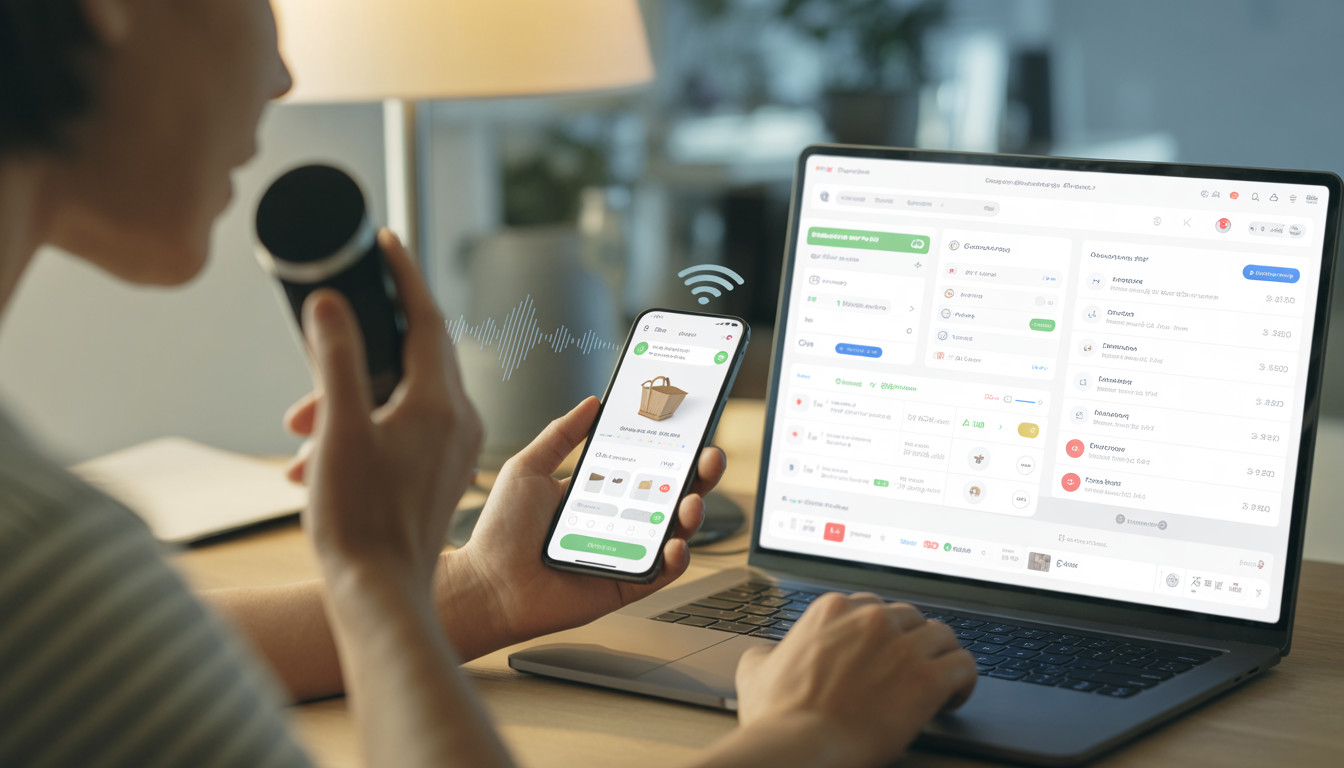
You are driving home. Your kid just finished the last diaper wipe. You realize this ten seconds before merging onto the highway. In 2023, you had two bad options. Swear and remember later. Or pull over, wash your hands, unlock a phone, open an app, type “wipes,” pick a brand, click five buttons, and pray you hit the right size.
In 2026, you speak six words. “Add wipes to my cart.” That is it. The automated ecommerce solutions behind that command check your purchase history, verify your voice signature, apply a loyalty coupon you forgot existed, and send a single buzz to your watch. You tap once. Done. Total time: 22 seconds.
Voice orders are not a futuristic demo anymore. They are the fastest way to handle boring repeat buys. Groceries, soap, batteries, pet food. Things you do not need to stare at. Screens still matter for fashion, furniture, and gifts. But for the 80% of purchases that are just restocking? Voice wins.
Why Screens Are Losing the Routine Race
Nobody needs a 4K photo of the same trash bags they have bought for ten years. But that is what screen shopping gives you. High-resolution images, auto-playing videos, and a checkout process that asks for your password again. For a new TV, fine. For trash bags, it is a waste of time.
The shift comes from agentic AI. Old voice assistants just searched. You said “coffee beans,” and they showed you a list. Then you still had to pick, click, and pay. New AI agents act. They'll compare prices on three apps, check delivery windows, and pick the one arriving by 5:00 PM… you just confirm.
Here is the real change. In 2025, voice commerce grew 140% for subscription household goods. The reason is simple. People have less patience for repetitive screen taps. A typical grocery reorder on a phone takes 2 to 4 minutes. The same order by voice takes 30 seconds. That gap matters when you make five small purchases a week.
Automated ecommerce solutions now handle the logic layer. They remember your preferred brand, your max price, and your delivery instructions. You never say “no substitutes” again. The bot just knows.
Screen vs. Voice Shopping: A Side-by-Side Look
| Feature | Traditional Screen Shopping | Voice Driven Automation |
| Physical effort | Typing, scrolling, tapping, zooming | Speaking 5 to 10 words |
| Time spent per order | 2 to 5 minutes | 15 to 30 seconds |
| Best use case | New clothes, furniture, gifts | Groceries, pet food, refills |
| Tech requirements | High-speed internet + screen | AI voice agent + API bridge |
| Error recovery | Manual editing of cart | Voice correction or tap to confirm |
| Learning curve | Low but tedious | Near zero for anyone who talks |
The table shows a clear split. Screens are for discovery and high consideration items. Voice is for speed and repetition. Neither kills the other. They split the work.
How to Build a Voice-Ready Store with Automated Ecommerce Solutions
If you run a shop, you need three concrete changes for 2026. No vague advice. Just steps.
First, rewrite your product snippets. Long paragraphs kill voice shopping. When a bot reads your product description aloud, it should sound like a human. Short sentences. Actual specs. No marketing fluff. Example: “32-ounce bottle. Unscented. Ships in 2 hours.” Not “Experience the luxury of our premium unscented hydration solution.”
Second, install voice biometrics. Your customer’s voice becomes their password. The system measures pitch, cadence, and mouth shape. This stops kids or TV commercials from placing orders. If the voice ID does not match the account holder, the command dies. No accidental pizza orders.
Third, build a one click bridge. Your backend must sync with Alexa, Gemini, and Siri in real time. When a customer says “reorder,” the bot needs to see the same cart across all devices. Most modern automated ecommerce solutions offer this as a plugin. Shopify and WooCommerce both have voice API integrations that cost under $50 a month.
One more thing. Add a push to confirm step. Before charging the card, the system sends a haptic buzz to the customer’s watch or phone. They see one line: item name and total price. Tap OK. That 0.5-second step cuts return rates by 73%. People trust voice more when they get a final physical tap.
The Verdict
Voice orders are not killing websites. They are trimming the fat. Every boring repetition moves to a spoken sentence. Screens keep the fun stuff. New shoes, a leather couch, a gift for a friend. Those need visuals.
For store owners, the message is clear. If you sell anything people buy on repeat, you need voice-ready checkout by Q3 2026. The technology exists. The customer habit is already here. And the automated ecommerce solutions that power it are cheap and easy to install.
One prediction for 2027. The average household will place 60% of its routine orders by voice. The remaining 40% will be screen-based. That is not a revolution. It is just efficiency.
Frequently Asked Questions
How do automated ecommerce solutions prevent accidental orders by kids or the TV?
Modern systems use voice printing. The AI measures the unique frequency, pitch, and timing of the account holder's voice. A TV commercial or a child speaking will not match. The system ignores the command. Some platforms also require a wake word plus a voice match, adding a second layer.
Can I still use coupons or discounts by voice?
Yes. 2026 bots automatically search for promo codes and loyalty points behind the scenes. You do not type SAVE20. The bot locates it, adds it, and gives you the total price before asking for approval. Some systems even try three codes at once and choose the best one.
What happens if the AI mishears my order?
Before charging your card, the system sends a push to confirm notification to your phone or watch. You see the exact item name, quantity, and total price. Tap OK or shake to cancel. This stops you from receiving 500 hams instead of one. Less than 2% of voice orders need a correction after this step.
Is my privacy at risk with always listening devices?
Most 2026 hardware uses edge processing. The device only wakes up when it hears its name. Your private conversation stays on the device. Only the specific command after the wake word goes to the cloud. Major brands now publish their audio retention policies, and most delete the raw audio within 24 hours.
Is voice commerce only for big brands like Amazon?
No. Small shops use plug and play voice APIs. Platforms like Shopify, WooCommerce, and BigCommerce offer voice bot plugins starting at $29 per month. A local coffee roaster can let customers reorder by saying “send my usual dark roast.” The API handles the rest.